
INCE-USA is offering the Nancy Timmerman Members’ Choice Project of the Year Award to acknowledge notable project(s) completed in the field of noise control or architectural acoustics. The primary candidate must be an Associate or Full Member of INCE-USA. Of the applications received, finalists will be selected for voting by INCE-USA Members. One or more projects may receive the award during any given year.
Award: Certificate and recognition of achievement in conference and INCE-USA materials.
Ethan Brush, Acentech
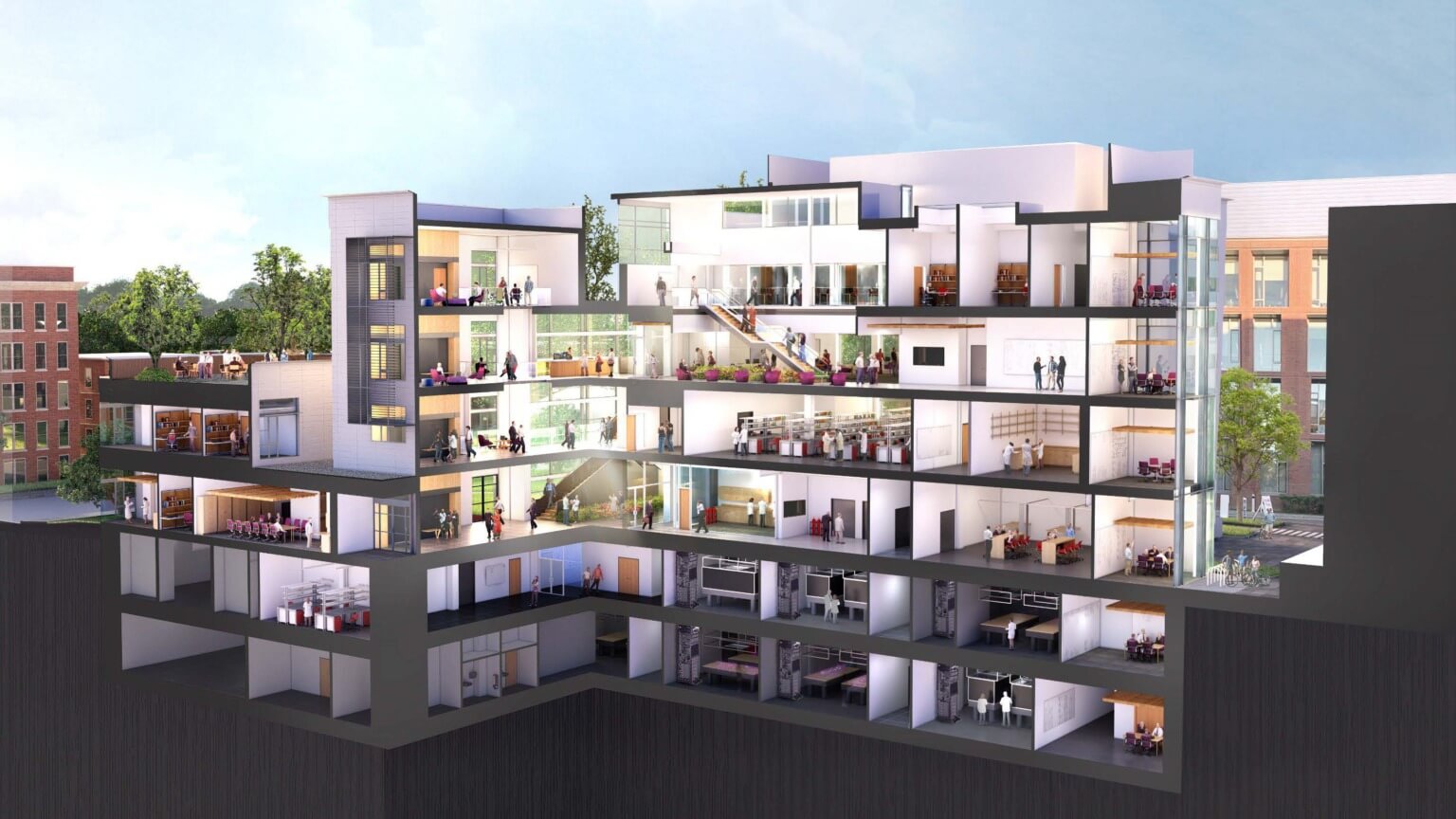
for the project: Transforming Classrooms and Offices to Quantum Computing Labs: Renovating an Existing University Building to a Low Vibration Facility
Completed in the early 2000’s, Harvard University’s building at 60 Oxford Street in Cambridge, MA was initially home to a data center, various classrooms, and department offices. Design work began in 2019 to transform the building to accommodate advanced laboratories working in quantum engineering, molecular biology, optical physics, and catalytic chemistry. The ability to conduct ultra-precision measurements was essential to the success of the new occupants, and upgrading the building’s vibration performance was a fundamental part of the renovation design. As the acoustics and vibration consultants for the project, Acentech worked with the design team to upgrade a building in the heart of campus that was not originally built with low vibration spaces in mind. The ultimate result was a facility that now hosts twenty-seven precise measurement labs, expanding Harvard’s research capabilities. Now named The David E. and Stacey L. Goel Quantum Science and Engineering Building, the facility opened to occupants in 2024.





Eric Wood, Acentech
George Maling, NAE
Bob Hellweg, Hellweg Acoustics
Adnan Akay, Bilkent University
Gregg Fleming, Volpe
for the project: Technology for a Quieter America (TQA) Workshops and Reports
 Felicia Doggett, President & CEO
Metropolitan Acoustics
for the project: One Riverside Pool Isolation
A problem arose at a recently completed high-rise condominium building in Philadelphia, PA. Tenants on many levels above a pool located on the second level of the building stressed that they could hear low-frequency sound when an early-morning swimmer was doing laps. Looking through literature, we found nothing to attest to the phenomenon that presented itself. To investigate, we used a 15 lb. rubber medicine ball to simulate the force caused by the swimmer, which also provided a repeatable source. Cavitation in the water created by the arm strokes of the swimmer was exciting the pool shell and transmitting through the structure ultimately converting to audible sound via the lightweight partitions in the living units. Our measurement system included time synchronized triaxial accelerometers to determine the transmission paths through the building. We identified this unique problem, determined the structural transmission paths, and provided recommendations which ultimately resulted in a successful outcome. ?Learn More Here!